
Introduction
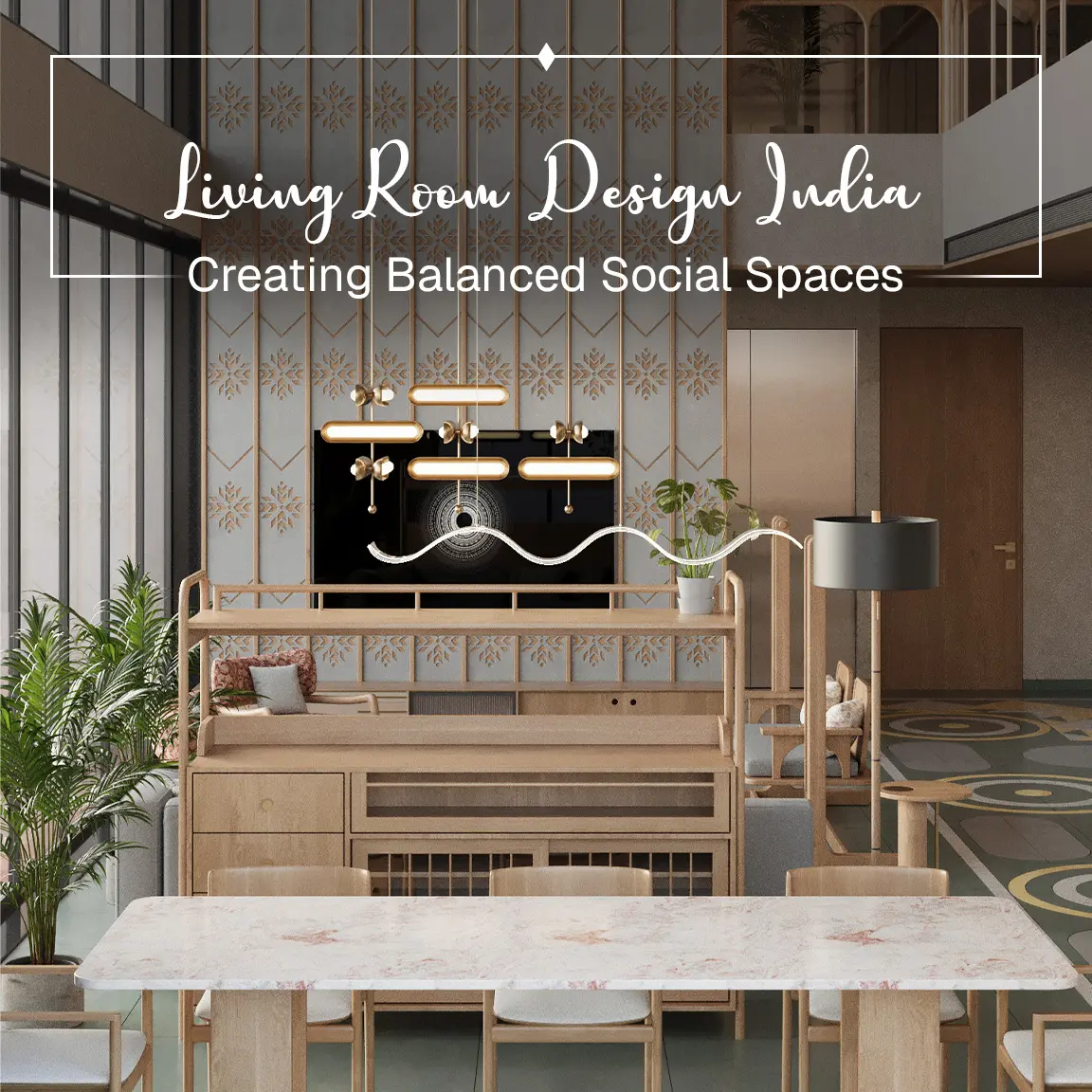
Living Room Design India shapes how people connect, relax, and express style at home. A well-designed space improves both comfort and functionality. Moreover, it reflects lifestyle, culture, and personal taste. Today, Indian homes demand balance between aesthetics and usability. Therefore, designers focus on creating seamless social spaces. These spaces support conversations while maintaining visual harmony. Whether compact or expansive, every living room benefits from thoughtful planning. Consequently, design choices must align with both global trends and Indian sensibilities.
Why Living Room Design Matters in India
Indian homes revolve around shared experiences. Therefore, the living room acts as a central social hub. Families gather, guests interact, and celebrations unfold here. As a result, design must support flexibility and movement.
Additionally, urban homes face space constraints. However, smart layouts can maximize usability. Good design ensures that even small spaces feel open and inviting. Furthermore, climate and cultural elements influence material and color choices. Thus, every decision impacts both comfort and visual appeal.
Key Elements of a Balanced Living Room
Balance defines successful Living Room Design India. It ensures that no element overwhelms the space. Instead, every component works together.
First, proportion matters. Furniture must suit room dimensions. Oversized sofas can restrict movement. On the other hand, smaller pieces improve flow.
Next, symmetry adds visual stability. Designers often align furniture or decor elements. However, asymmetry can also create dynamic interest.
Moreover, texture layering enhances depth. Combine wood, fabric, and metal for contrast. This approach keeps the design engaging without clutter.
Zoning & Space Planning (Social vs Private)
Zoning improves functionality in modern homes. It separates social and personal interactions within the same space. Therefore, designers create distinct zones without physical barriers.
For example, a seating area encourages conversation. Meanwhile, a reading corner offers privacy. Rugs, lighting, and furniture placement define these zones effectively.
Additionally, open-plan layouts benefit from subtle zoning techniques. Partition screens or shelving units can divide spaces visually. As a result, the room feels organized yet connected.
Explore tailored Residential Interiors solutions to achieve optimized zoning in your home.
Furniture Layout Strategies
Furniture layout drives usability. Therefore, placement must support natural movement. A central focal point, such as a TV or artwork, guides arrangement.
Moreover, seating should encourage interaction. Circular or L-shaped layouts work well for social spaces. However, avoid pushing all furniture against walls.
Instead, create floating arrangements. This approach enhances depth and flow. Additionally, maintain clear pathways for easy navigation.
For expert execution, consider Turnkey Solutions that manage layout planning and installation seamlessly.
Color, Lighting & Materials
Color defines mood instantly. Neutral tones create calm environments. Meanwhile, bold accents add personality. Therefore, balance is essential.
Lighting enhances both function and aesthetics. Layered lighting works best. Combine ambient, task, and accent lights for flexibility.
Furthermore, natural materials bring warmth. Wood, stone, and textiles create a timeless appeal. However, polished finishes add a modern touch.
Refer to global design insights from sources like ArchDaily and Dezeen for evolving trends.
Modern vs Traditional Indian Living Rooms
Modern Living Room Design India focuses on minimalism and clean lines. It uses neutral palettes and sleek furniture. Consequently, spaces feel open and uncluttered.
Traditional designs emphasize richness and detail. Carved wood, vibrant colors, and cultural elements dominate. However, these spaces can feel heavy if overdone.
Today, fusion styles dominate. Designers blend modern simplicity with traditional accents. This approach creates unique and personalized interiors.
Browse curated Portfolio Projects to see how modern and traditional styles merge seamlessly.
Mistakes to Avoid
Many living rooms fail due to poor planning. Therefore, avoid common mistakes.
First, overcrowding reduces functionality. Too much furniture restricts movement. Instead, prioritize essential pieces.
Second, ignoring lighting creates dull spaces. Natural and artificial light must complement each other.
Third, poor color choices disrupt harmony. Clashing tones can overwhelm the design. Therefore, stick to a cohesive palette.
Lastly, neglecting scale affects balance. Furniture and decor must match room proportions.
Professional guidance through Commercial Design expertise can prevent such errors effectively.
Conclusion
Living Room Design India requires thoughtful balance between style and function. Every element must serve a purpose while enhancing aesthetics. Moreover, zoning, layout, and material choices define the overall experience. Therefore, investing in expert design ensures long-term value. Create spaces that invite connection and reflect your identity. Explore professional interior solutions to transform your living room into a refined social hub.